
Week 2 — From Gold Handles to Invisible Doors: The New Language of Chinese Homes
Updated: Aug 28
A few decades ago, luxury in a home was easy to recognize.
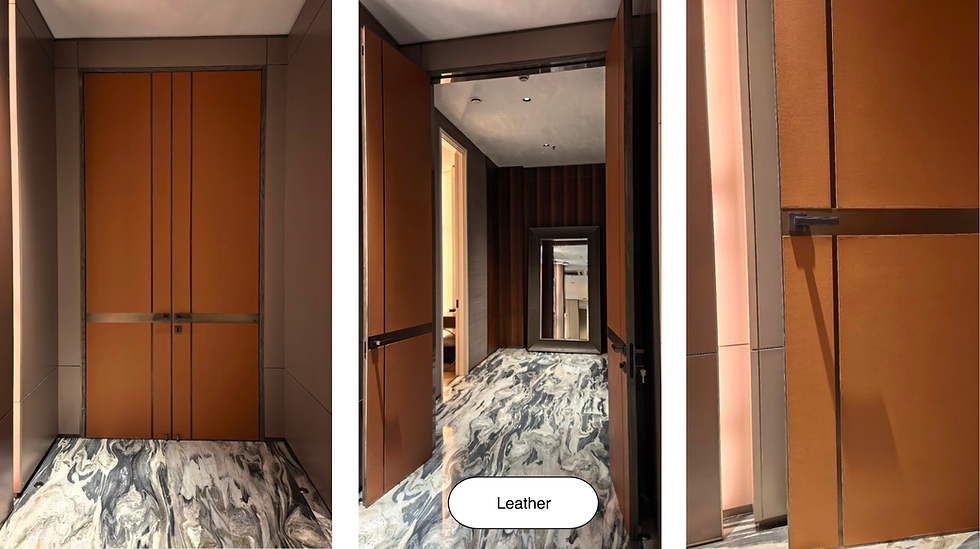
A heavy wooden door. Dark mahogany or rosewood. A thick frame. A polished brass handle. Maybe some carved details near the top. The message was clear: quality should be visible. A beautiful door was not just functional. It was a statement. It showed craftsmanship, permanence, and success.
But a new generation of Chinese homeowners is beginning to define luxury differently.
Today, some of the most refined interiors are built around things that disappear. A kitchen that hides its appliances. A ceiling that removes visual clutter. Storage that blends into the walls. And now, doors that almost vanish completely.
The disappearing door is not about making a home look empty. It is about creating calm. The best design does not always ask for attention. Sometimes, it simply steps aside.

The Door That Wasn’t There
Walk into a room with a seamless door, and you might not notice anything special. That is exactly the point.
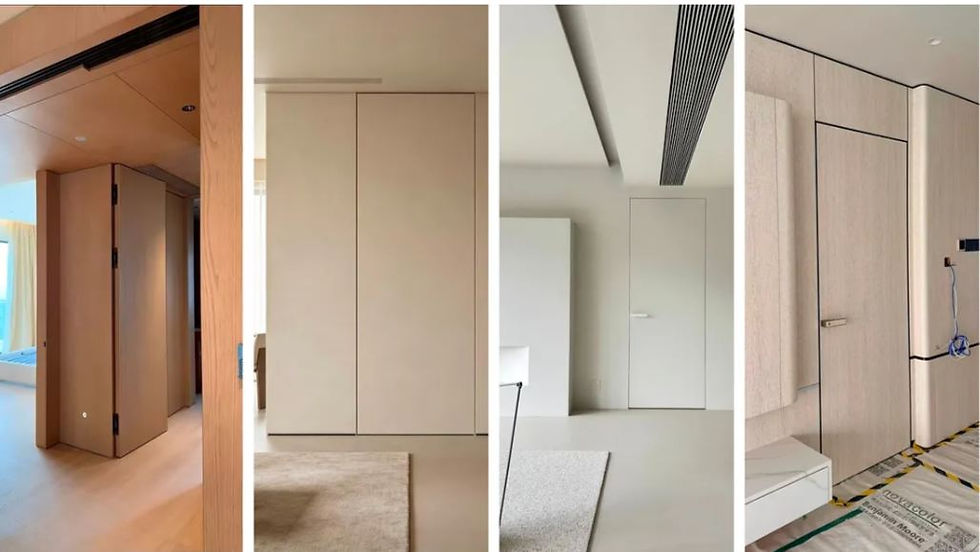
The door sits flush with the wall. Same color. Same material. No visible frame. No traditional handle. No obvious hinge. From several meters away, it looks like a continuous wall. Then someone pushes a panel, and it opens. A bathroom appears. A home office. A storage room. A private space hidden in plain sight.
That small moment of surprise never gets old.
For many younger Chinese homeowners, the disappearing door has become a signature of the seamless home. Not because it is flashy. Because it is quiet. It does not compete with the room. It does not announce itself. It simply allows the architecture to remain uninterrupted.
From Visible Wealth to Invisible Luxury
The difference between generations can be seen in the smallest details.
Many homes from previous generations celebrated quality through visible elements: dark wood finishes, decorative patterns, large handles, and strong contrasts between materials. A door was supposed to look like a door. It had weight. It had presence. And it communicated something important: "This home is valuable."
For a generation that grew up during rapid economic development, visible quality made sense. The home was a symbol of achievement.
But tastes are changing.
Many younger homeowners have grown up surrounded by visual noise—crowded cities, advertising, digital screens, and endless information. Their idea of comfort is different. They are not looking for more things to display. They are looking for fewer things competing for attention.
A disappearing door represents that shift perfectly. The confidence is no longer in what is shown. It is in what does not need to be shown.
Making a Door Disappear at Any Budget
A seamless door may look like a luxury feature, but the basic idea can work at almost any budget. The goal is simple: reduce visual interruption. The more time and craftsmanship invested, the closer the door comes to completely disappearing.
Entry Level — ¥500–2,000 per Door (1 Euro = 8 Rmb)
The Art of Camouflage
The easiest way to make a door less noticeable is not to replace it—it is to stop it from standing out.
Paint the door and the wall the same color. A white door against a white wall disappears far more easily than a contrasting wooden door with a visible frame. Light neutrals (white, off-white, or light gray) work best.
Remove unnecessary visual elements. Replace large handles with simple push-latches (¥10–20) or small flush pulls. The frame can also be painted to match the wall.
Work with what you have. Skip structural changes. Don’t try to remove frames or replace doors. Just focus on visual harmony.
Result: A room where doors no longer shout. Your parents might visit and say, "Why did you paint the door the same color as the wall? Now I can’t see it." And that’s exactly the point.

Middle Range — ¥3,000–8,000 per Door
The Illusion of Seamlessness
For a more refined result, details matter.
Taller door slabs (2400mm or higher) create a stronger connection between the wall and door, making the transition feel more natural.
Concealed hinges (e.g., Soss, BLUM, or Häfele, ¥150–300 each) remove one of the most obvious signs that a door exists. Cheap hinges may sag over time, ruining the clean alignment.
Precision alignment ensures the door sits perfectly flush with the wall. Invest in quality installation—this is where the difference between "almost seamless" and "truly seamless" lies.
Matching materials: Use the same finish for the door and wall (e.g., matte paint, wood veneer, or lacquer).
Result: Doors that genuinely disappear. Guests will walk past a bathroom and not realize it’s there until you point it out. The moment of surprise—followed by delight—is the whole point.

Luxury — ¥15,000–40,000+ per Door
The Invisible Architecture
At this level, the door doesn’t just hide—it becomes part of the architecture.
Ceiling-height doors (2800mm–3000mm): No transom, no gap. Just one continuous surface from floor to ceiling.
Aluminum honeycomb cores: Prevents warping, ensuring the door stays straight and feels solid when pushed.
Matching veneers or finishes: Use the same imported veneer (e.g., Cleaf or Egger) on the door and the adjacent wall. The grain flows seamlessly from wall to door, creating an uninterrupted surface.
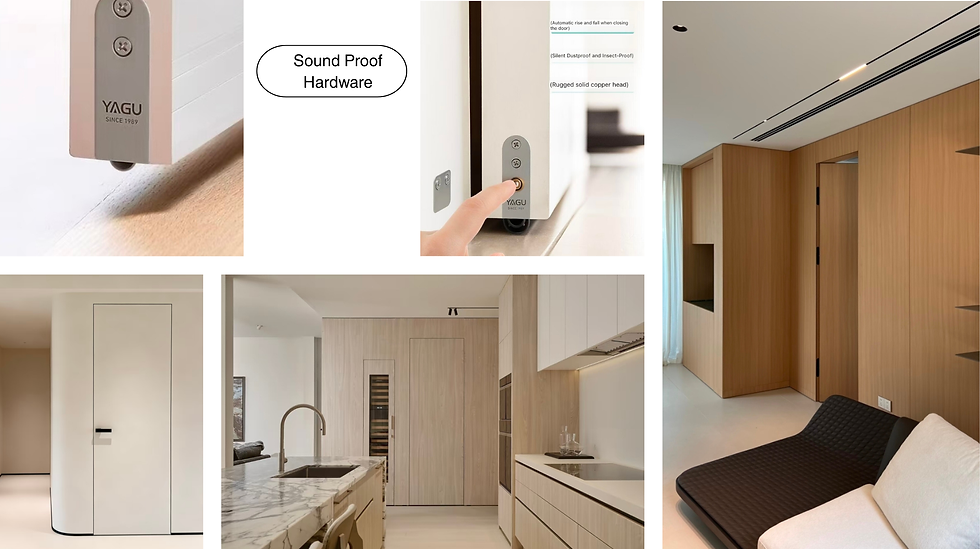
Concealed frames with magnetic seals: The frame sits flush inside the wall. When the door closes, magnets pull it tight, eliminating gaps and light bleed.
Touch-to-open systems: A light push pops the door open. No handle, no visible hardware—just a smooth panel.
Hidden rooms: Use seamless doors to conceal home offices, wine cellars, or ensuite bathrooms. Guests shouldn’t guess a door is there until you show them.
Five-star hotel door seals: A drop-down seal at the bottom activates when the door
locks, blocking sound and light. The solid thud when it closes? Pure luxury.
Where to Spend:
Custom fabrication: Every door is measured on-site for millimeter precision.
Skilled installation: Hire millworkers trained in seamless systems—this is not a DIY project.
High-end hardware: Invest in motorized systems (¥5,000–10,000+) for doors that open with a button, wave, or voice command. Hardware hides inside the frame, with soft-close mechanisms and backup batteries.
Result: A home where doors literally disappear. You’ll have guests who stay for hours and never realize there’s a powder room in the hallway. Friends will ask, "Wait, where does that wall go?" Then you push it, and they laugh. Every time.
The Gap That Nobody Notices
One interesting detail about disappearing doors: perfection doesn’t mean eliminating every gap. A door needs space to open and close.
But the size of that gap tells a story:
Entry-level: 10–15mm gap. Visible, but acceptable.
Middle range: 5–8mm gap. Noticeable only if you look closely.
Luxury: 3–5mm gap. Your eye passes right over it.
The goal is not technical perfection. It’s visual silence. Good design doesn’t remove every practical requirement—it simply makes those requirements disappear into the background.


The Smallest Detail Can Change Everything
The push-latch is a perfect example. For generations, opening a door meant grabbing a handle and pulling. The handle announced itself. A push-latch does the opposite.
How it works: Press the door lightly. The latch releases. The door pops open a few millimeters. Pull it from there. To close, push it shut until it clicks.
Why it matters: No handle. No pull. No visible hardware. For many young homeowners, this small switch captures the entire design shift. A handle says, "Here I am." A push-latch says nothing at all.
Budget Tips for Push-Latches:
Entry-level: Cheap push-latches (¥10–20) work fine for a few years.
Mid-range: Quality latches from Blum or Hettich (¥150–300) last decades and feel smooth every time.
Luxury: Motorized systems (¥5,000–10,000+) for hands-free operation. Press a button, wave your hand, or use voice control—the wall moves on demand.

Beyond the Door
The disappearing door is not really about doors. It is part of a larger transformation in residential design.
The previous idea of luxury was often based on addition: more decoration, more expensive materials, more visible details. The new idea of luxury is increasingly based on subtraction: less noise, less clutter, less visual competition.
A home should not constantly remind you how much effort went into creating it. The best spaces feel effortless.
A disappearing door is a small example of a much bigger change. The home no longer needs to prove its value. It creates value through the feeling it gives you.
Sometimes, the most sophisticated design element is the one you almost never notice.
A door that disappears allows the wall to become the wall again. And that may be the new definition of luxury.
Next week: Seamless Kitchens — How Cabinets, Appliances, and Even Pantries Disappear into the Architecture of the Home.


Comments